An Olympic weightlifting session is much more than writing down ‘snatch: 70 kg’. Between technique sets, lift variations, barbell complexes, pulls and squats, it can be surprisingly hard to reconstruct what actually happened.
Grunty lets you log exercises, sets, reps, weights and your own effort ratings by voice or text. It can also structure complexes containing several movements, so you can keep a useful session history.
Here is how to keep a weightlifting log that reflects the sport rather than reducing an entire training session to one number.
Which Olympic weightlifting movements should you track?
In competition, the International Weightlifting Federation (IWF) recognizes two lifts: the snatch and the clean & jerk. The competition total combines the best successful attempt in each 1.
Training includes much more than these two competition lifts. Hang variations, power variations, pulls and accessory strength work have different technical demands. Research also suggests that Olympic lifts and their derivatives do not all create the same fatigue response 2.
| Movement family | Examples worth distinguishing in a log |
|---|---|
| Snatch | Snatch, hang snatch, dead hang snatch, power snatch |
| Clean and jerk | Clean, clean & jerk, split jerk |
| Pulls and strength | High pull, snatch pull, front squat, overhead squat, back squat |
| Accessories | Jumps, trunk exercises and other movements logged separately when appropriate |
A clean on its own should not become a clean & jerk in your workout history. Likewise, a hang snatch and a full snatch should not automatically be treated as identical performances.
Sets, reps and weights: keep the full structure
For an explosive lift, total tonnage alone cannot tell the whole story. Preserve the specific variation, the weight actually lifted, and the completed repetitions or attempts.
An illustrative snatch session might look like this:
| Movement | Sets / reps | Load |
|---|---|---|
| Technical snatch | 3 × 3 | 40 kg |
| Hang snatch | 3 × 2 | 50 kg |
| Full snatch | 5 × 1 | 60–70 kg |
This is an example, not a training prescription. It shows why distinct blocks and lift variations are more informative than one reported maximum.
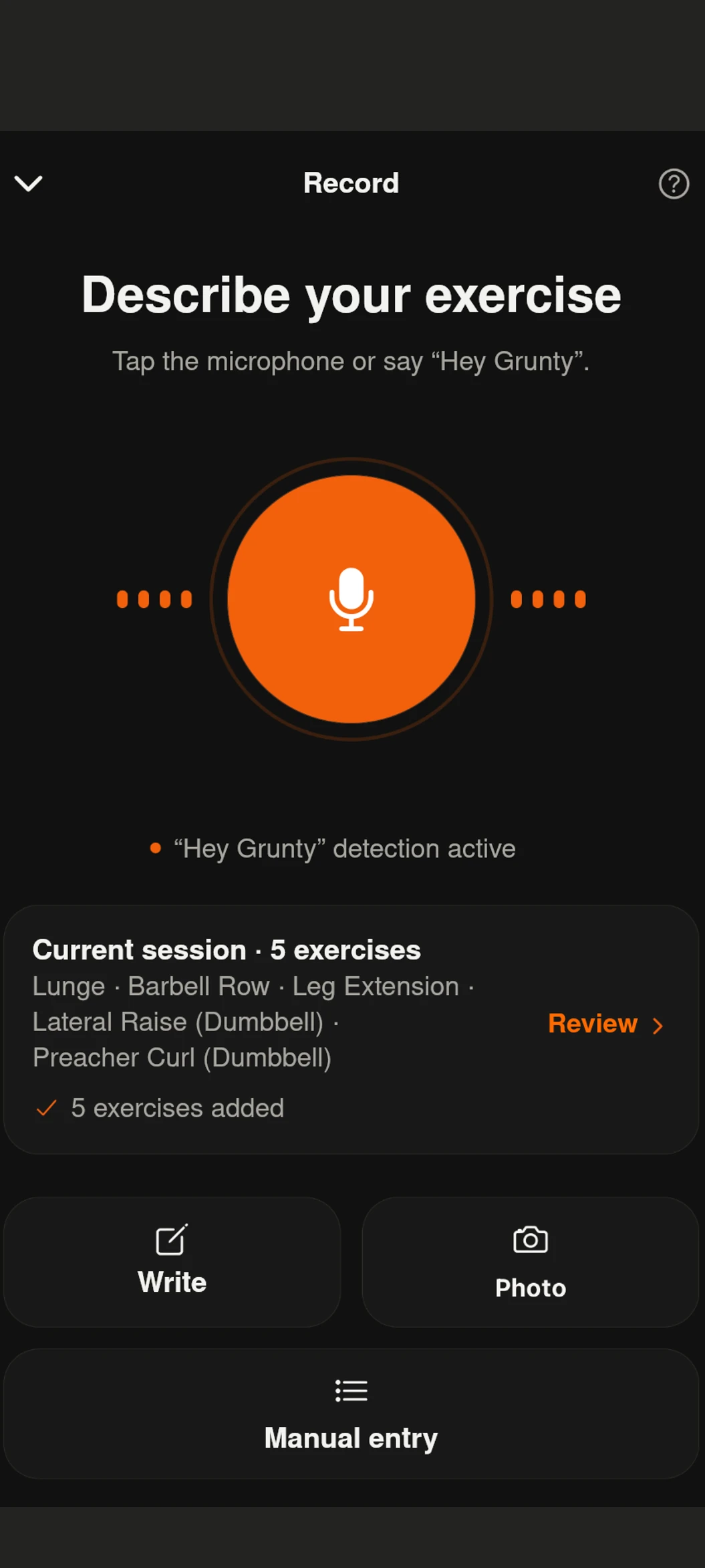
With Grunty, you can describe this in natural language: ‘Three sets of three snatches at 40 kilos, then three sets of two hang snatches at 50 kilos.’ Review and adjust the recognized values before confirming.
How to record a weightlifting complex
A barbell complex strings together several movements during a single sequence. It may combine technique and strength without being a race against the clock.
Example: 5 complexes at 60 kg: 1 clean + 2 front squats + 1 split jerk.
- One complex consists of those three movements in that order.
- The stated 60 kg load applies to the described complex.
- Five rounds are distinct from the repetitions inside each round (1 / 2 / 1).
Grunty includes specific rules to reconstruct complexes, preserve the constituent movements and avoid incorrectly converting a clearly stated ‘clean’ into a full ‘clean & jerk’.
A complex is not just one generic exercise: its useful history lies in the movements and repetitions it contains.
You can also describe a less standard sequence: ‘Four complexes at 50 kg: one dead hang snatch, one snatch and two high pulls.’ As always, check the movements, reps and loads before saving.
Circuits and mixed sessions
A typical lifting session can include mobility, full snatches, heavy front squats and a short accessory circuit.
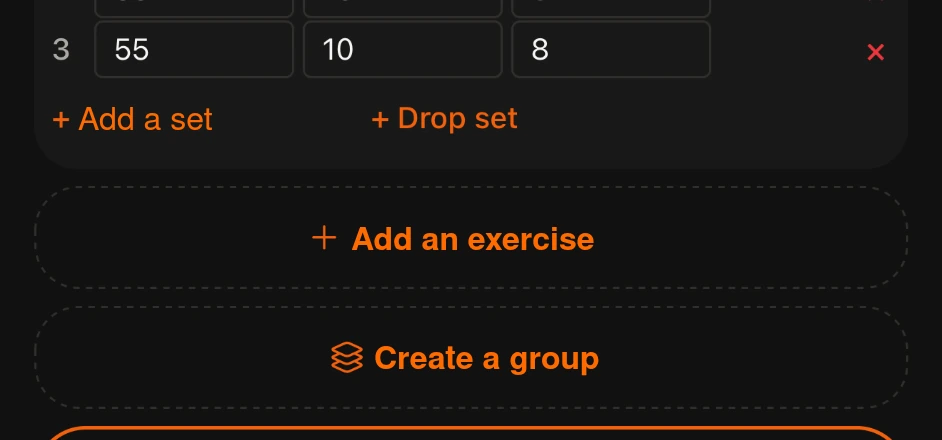
Grunty can separate straight sets from grouped work, including complexes and fixed-round circuits. Timed formats such as EMOM and AMRAP can also be recorded when they are explicitly part of the session.
Example: ‘After my cleans, three rounds of 10 box jumps, 8 light front squats and a 30-second plank.’ Include the order, rounds and rest periods when they matter.
A technical complex should not automatically become a ‘For Time’ workout: lift quality, not completion speed, may be the entire objective.
Why record RPE as well as the weight?
External load tells you what was on the bar. Rate of perceived exertion (RPE) describes how difficult the effort felt when you report it. They complement each other, but are different measurements.
For example, ‘5 singles at 75 kg, RPE 7’ and ‘5 singles at 75 kg, RPE 9’ use the same load and reps, but report a different perceived difficulty.
RPE is not a direct measurement of bar speed, technical quality or injury risk. The relationship between fatigue, perceived effort and performance depends on the movement and the athlete.
Research comparing Olympic lifts and derivatives indicates that exercises performed with matched volume and intensity can still produce different fatigue responses 2.
- Log RPE only if you assessed it—Grunty should not invent it.
- Note missed lifts and technical errors separately instead of treating them as successful repetitions.
- Compare like with like: movement variant, movement standard, load and relevant context.
For more on subjective effort, see our RIR vs RPE guide 3.
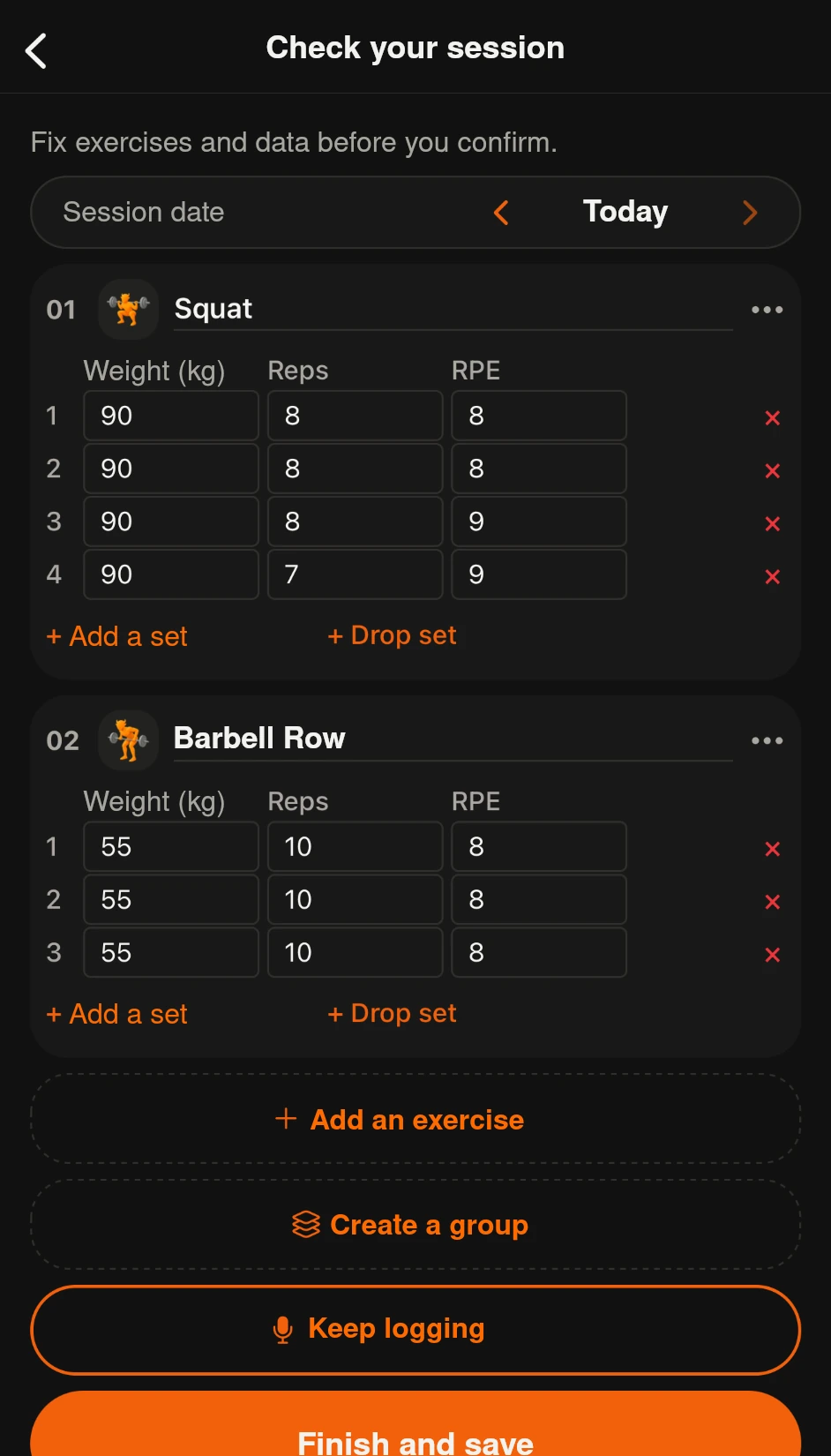
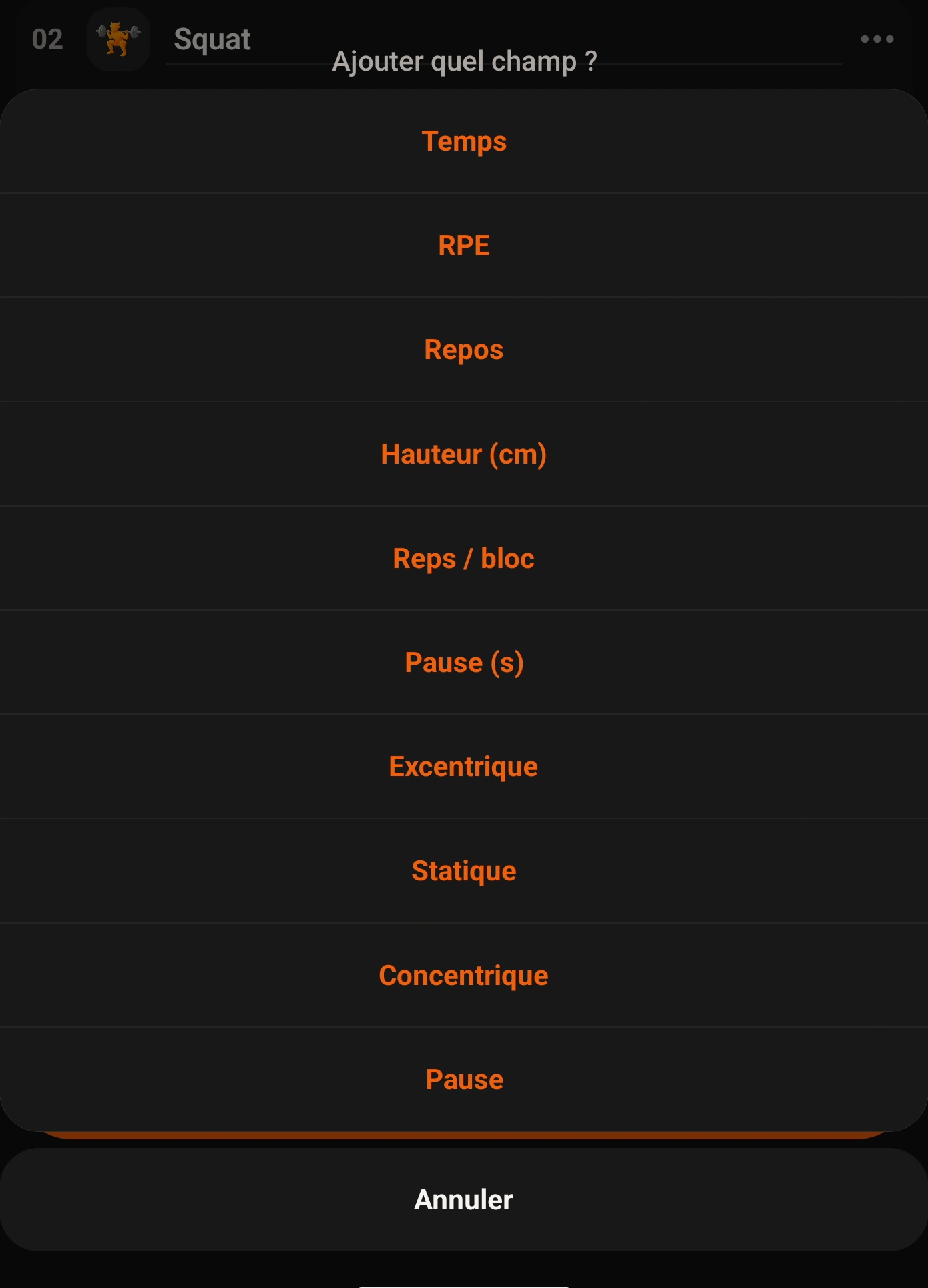
Three ways to log your session in Grunty
1. Use your voice during training
‘I did five complexes at 60 kilos: one clean, two front squats and one jerk, RPE 8. Then four sets of five box jumps.’
2. Write it in natural language
Enter the same training details as text, including loads, sets and effort ratings that you noted at the gym.
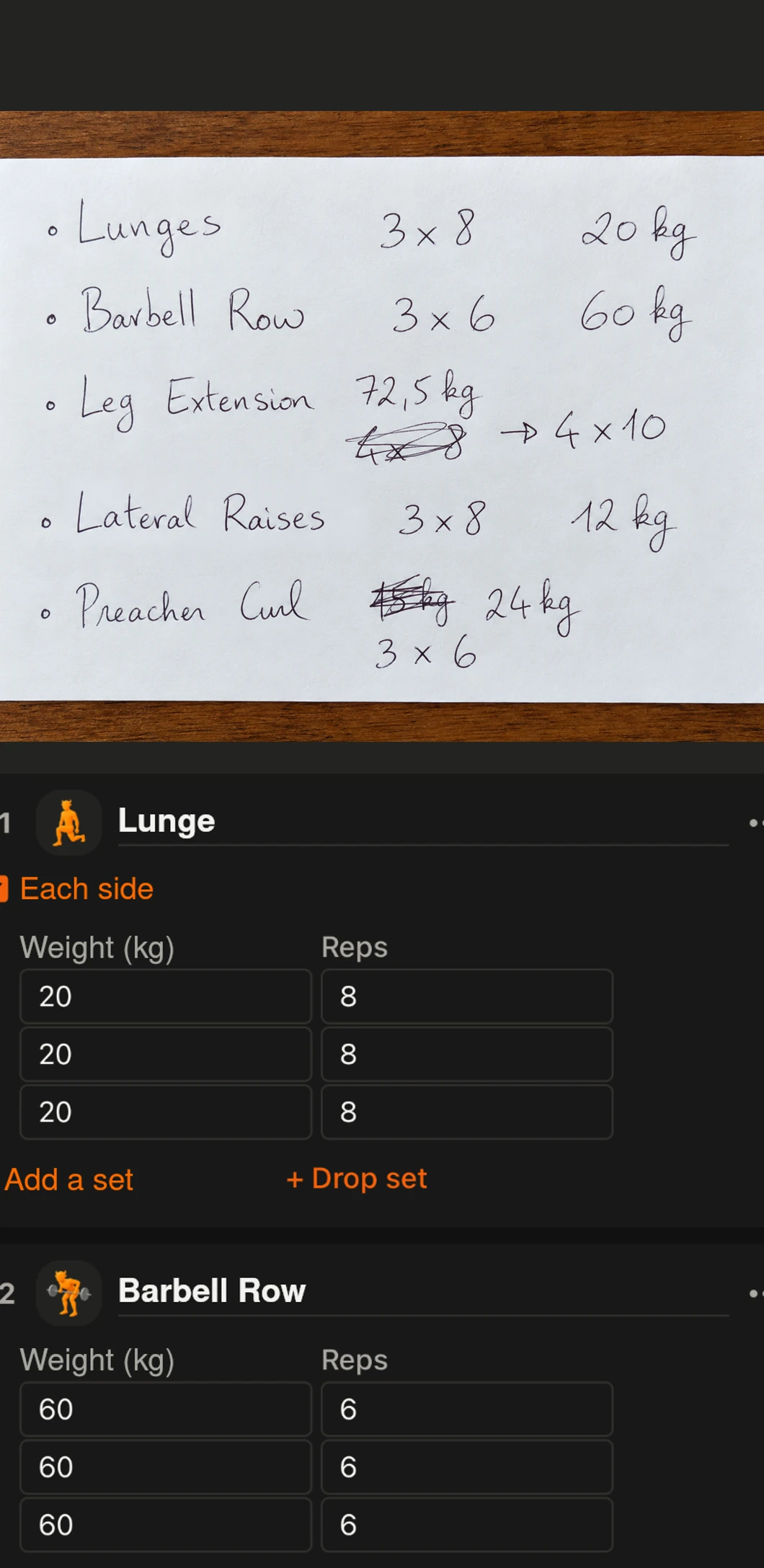
3. Import a picture of your written workout
With Grunty Premium, a photo or screenshot of a workout plan can be turned into structured training data. Image quality and legibility matter, and you should always check the output.
What should you compare in your training history?
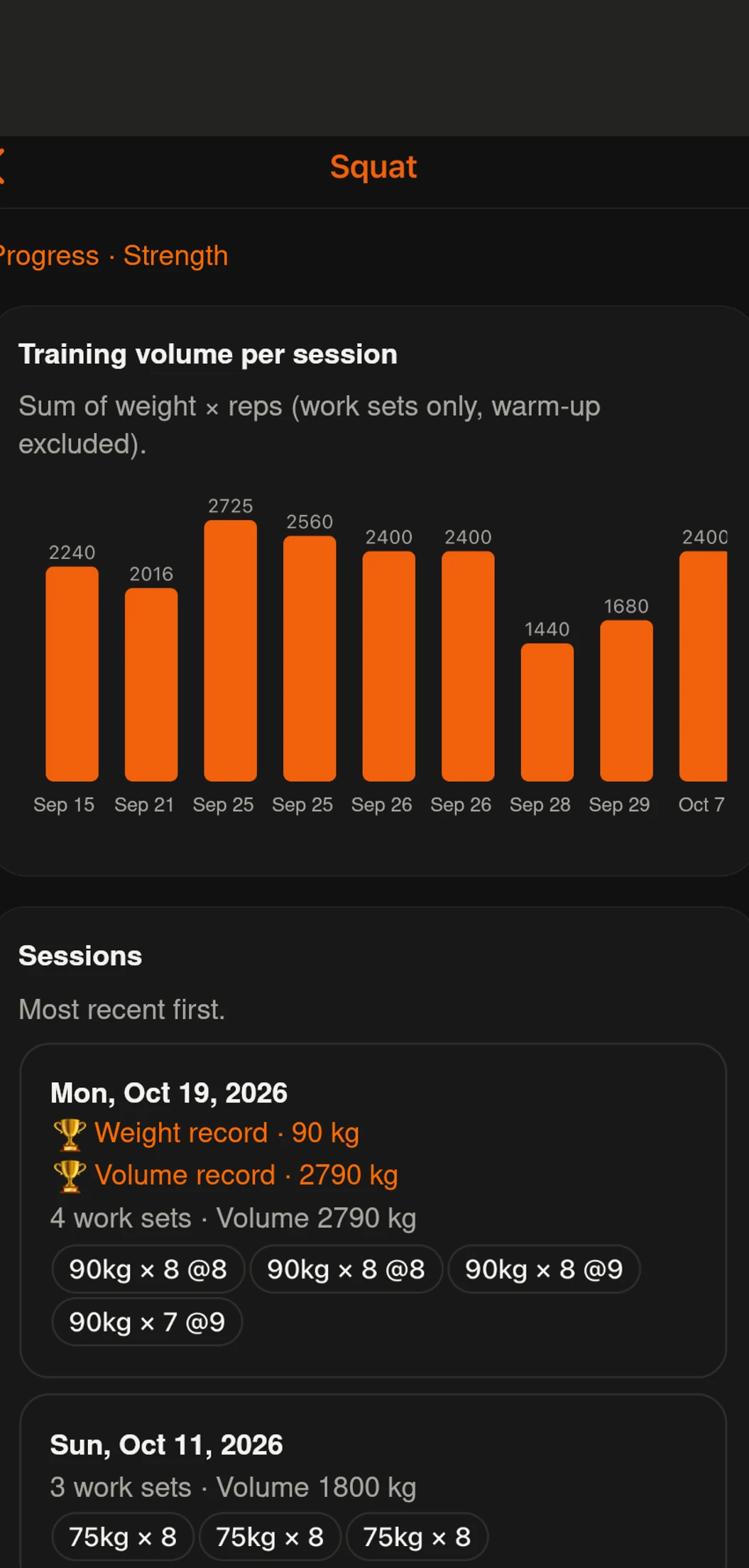
Over time, compare similar movement variations performed under reasonably similar conditions: clean singles, the load of an identical complex, reported RPE, useful practice volume and technical notes.
Do not confuse a heavier power snatch with a new full-snatch personal record. A single poorer day is not automatically a loss of progress.
A training log is valuable because it reconstructs what you did, not because it can independently judge every technical aspect of the lift. For load progression, see our dedicated guide 4.
Frequently asked questions
Can Grunty tell a clean from a clean & jerk?
Its parsing rules explicitly distinguish a clean by itself from a clean & jerk when you state the movement clearly. Always review the extraction.
Can I log a complex with several different movements?
Yes. Describe the number of rounds, movement order, repetitions and weight—for example, ‘5 rounds of 1 clean, 2 front squats and 1 jerk at 60 kg’.
Does Grunty calculate RPE automatically?
No. RPE should be presented as an effort rating you provide, not an automatically measured biomechanical value.
Should I log every warm-up set?
That depends on your goals. Warm-up sets can add useful context, as long as they are distinguished from working sets.
Key takeaways
A useful weightlifting log separates competition lifts from their variations, cleans from clean & jerks, straight sets from complexes, and external weight from perceived effort.
Good tracking is not only about how much you lifted; it's about what you actually did with the bar.
Voice, text and Premium photo import can help preserve that structure when you check the recognized details before saving.
Further reading
- Log a CrossFit WOD from a photo: AMRAP, EMOM and benchmarks
- When to increase weights in strength training
- RIR and RPE explained
Sources and references
- 1. International Weightlifting Federation — The Two Lifts ↗
- 2. Comparison between Olympic Weightlifting Lifts and Derivatives for External Load and Fatigue Monitoring (2022), PMID 36554023 ↗
- 3. Grunty Blog — RIR and RPE in strength training ↗
- 4. Grunty Blog — When to Increase Weights in Strength Training ↗
This article describes illustrative workout logs and Grunty features verified in the application's code. It does not replace qualified Olympic lifting coaching. Complex variants may require manual corrections.